Operation and support

The purchase of Stingray nodes includes a service and support agreement covering the laser nodes and all associated equipment and software.
The agreement runs for five years, with the option to extend it if the hardware remains in good condition and allows continued reliable operation.
The service and support agreement includes installation, training, maintenance, scheduled servicing, spare parts, software updates, and biological monitoring and advisory services tailored to each fish farmer.
Monitoring
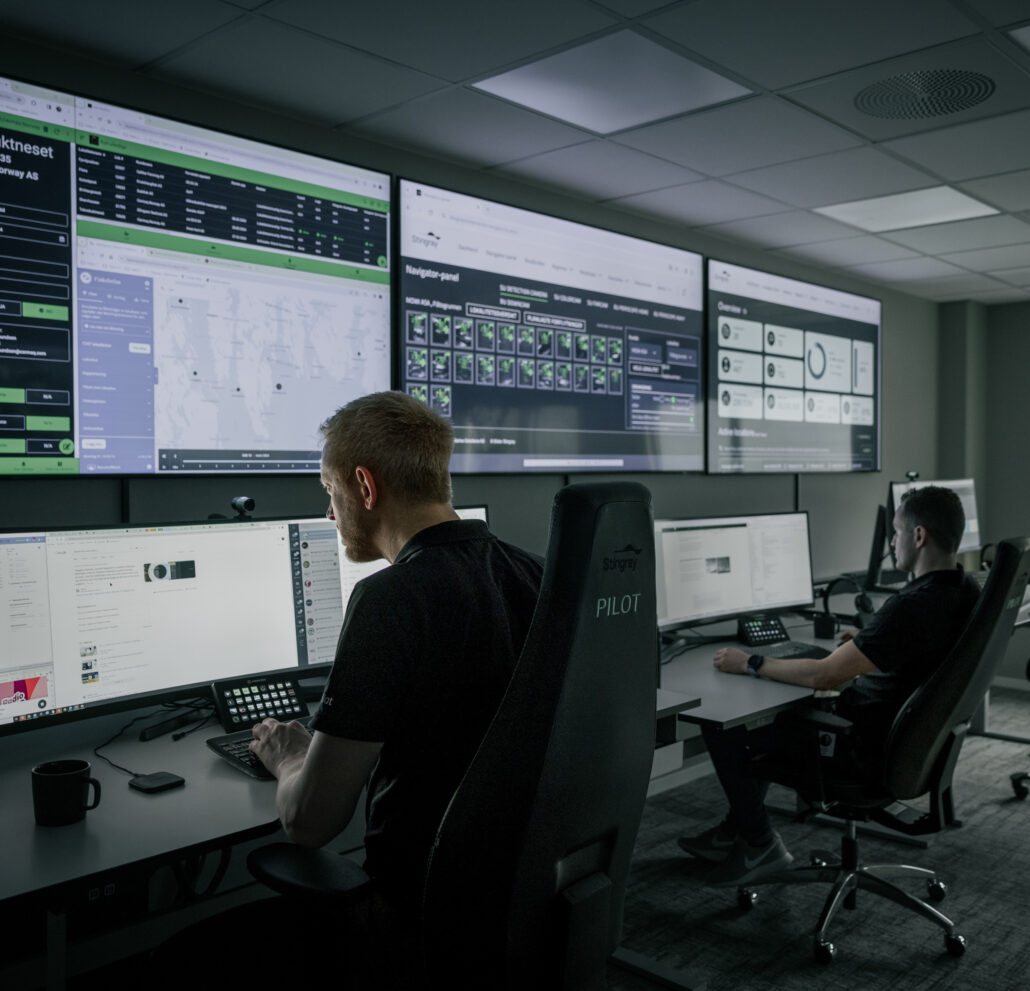
Stingray monitors connected nodes from its control centre at the company’s headquarters in Oslo and in Fauske. Each node requires a stable power supply and internet connection to remove sea lice, capture images and transmit operational data.
The Monitoring team tracks the operational status and location of each node and maintains regular contact with personnel at the fish-farming site. An alarm system alerts the team when a node requires attention, allowing technical issues to be investigated remotely.
Many issues can be diagnosed and resolved from the control centre. When additional follow-up is required, the Software or Service team is engaged.
Positioning
Effective positioning ensures that fish pass in front of the node and that the system has a clear view of the dorsal surface, where sea lice are commonly found. This is important for effective sea lice removal, image capture and the performance of the system’s analytical applications.
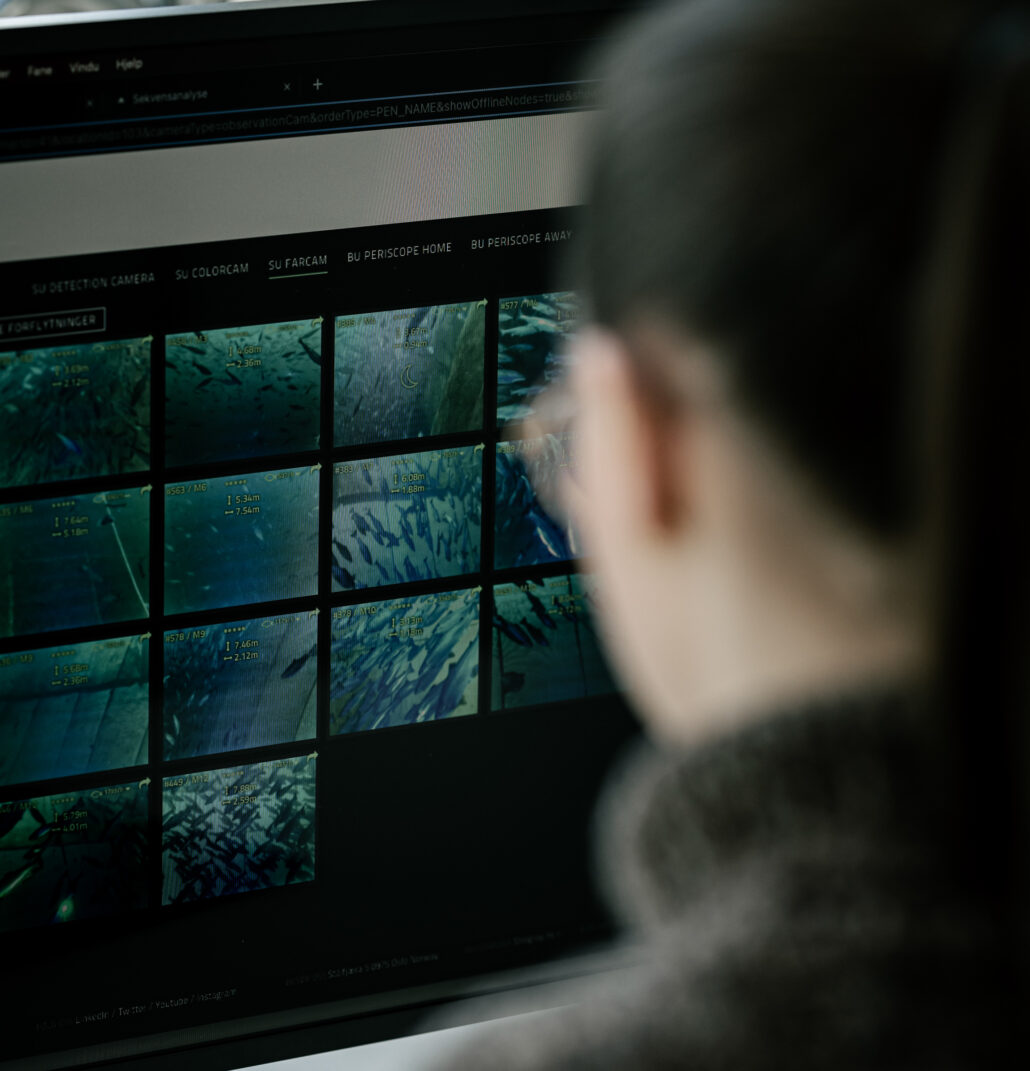
The Positioning team continuously optimises the placement and angle of each node in relation to the fish and changing conditions in the pen. Nodes can move vertically and horizontally and rotate around their own axis. Fish farmers can also adjust their nodes through Stingray Navigator.
The team also observes fish behaviour around the node. Changes in behaviour may indicate disease, sexual maturation or other welfare concerns and can be followed up by relevant teams within Stingray.

Analysis and Advisory Services
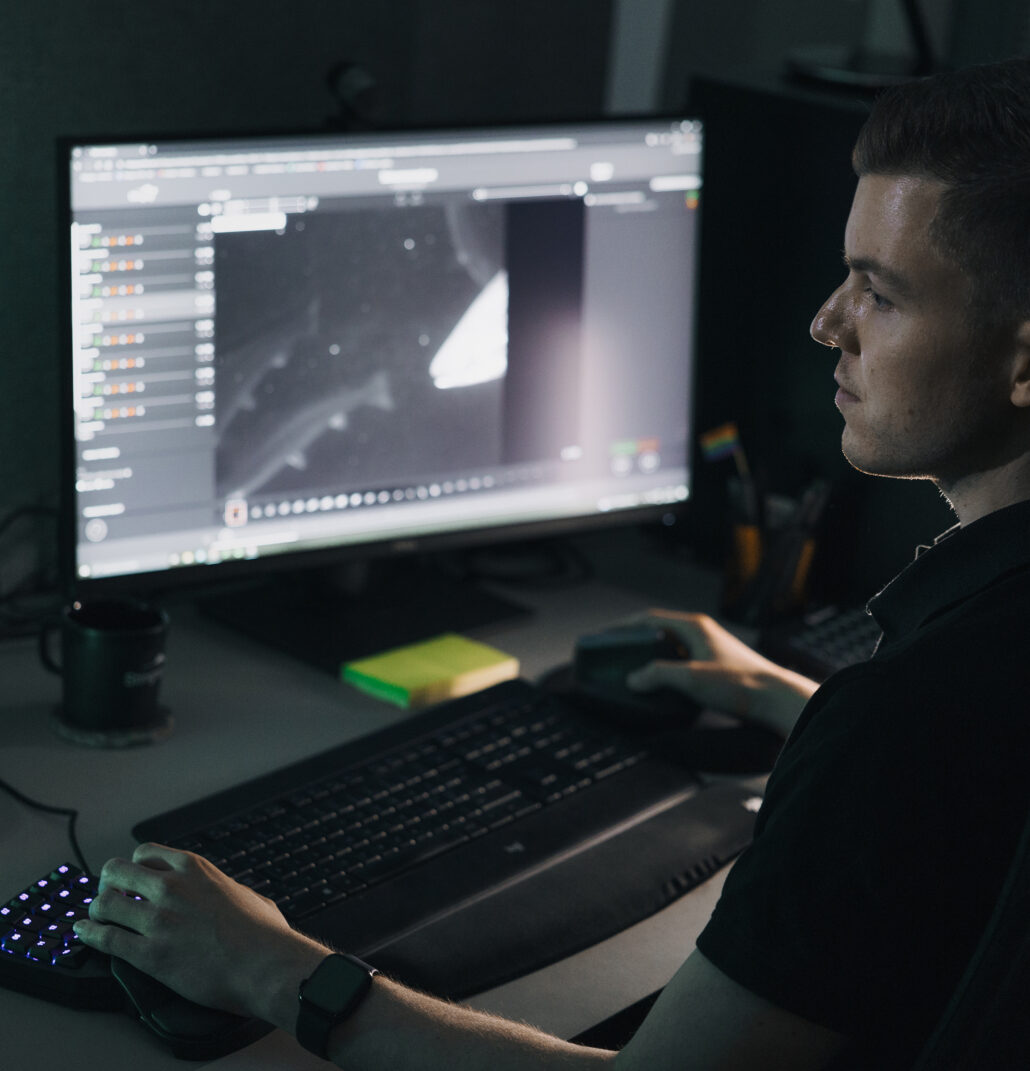
Image analysts and veterinarians at Stingray Aqua review images captured by the laser nodes each week. The team verifies that the lasers are accurately targeting sea lice and assesses indicators of fish health and welfare.
The images are also used to train and further develop the system’s machine learning models, improving its ability to recognise sea lice and other indicators of fish welfare.
Image analysis can also identify potential welfare challenges such as wounds, scale loss, fin damage and sexual maturation. Stingray Aqua uses these observations to provide fish farmers with timely insights and advice. Early detection and appropriate follow-up can help prevent more serious health and welfare consequences.
Stingray Online
Stingray Online gives fish farmers access to structured real-time and historical data, videos and images from connected nodes across their sites.
The portal brings together operational information and analytical tools in one interface.
Fish farmers can use this information to monitor system performance, follow sea lice levels and assess fish-health and welfare indicators.
These insights support data-driven production decisions and help fish farmers determine when further investigation or action may be required.