Fish Farmer

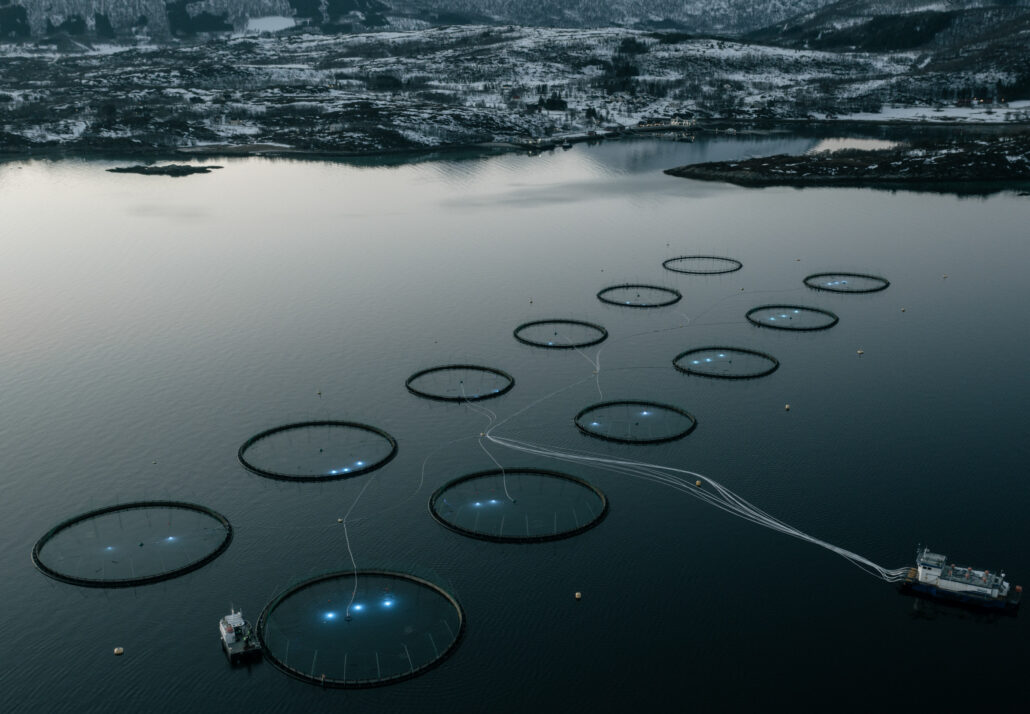
The Stingray system supports fish farmers in improving fish health and welfare, managing sea lice and making informed production decisions. Continuous monitoring and preventive sea lice control provide insights and operational support without unnecessary handling of the fish.
Fish Health and Welfare
Stingray’s vision is to improve fish health and enable smarter harvesting from the sea. This includes supporting fish farmers in meeting the Five Freedoms of Animal Welfare, which are:
- Freedom from hunger, thirst and malnutrition
- Freedom from discomfort
- Freedom from pain, injury and disease
- Freedom to express normal behaviour
- Freedom from fear and distress
Stingray’s approach supports these recognised animal-welfare principles by helping fish farmers monitor fish continuously, prevent disease and injury, reduce stressful handling and respond earlier to potential welfare concerns.

Sea Lice Management
The Stingray system combines preventive sea lice removal with continuous, image-based sea lice monitoring. By removing sea lice while the fish remain in the pen, the system can reduce the need for handling, fasting, chemical treatments and other reactive interventions.
When the laser beam targets a sea louse, the louse absorbs the energy and detaches from the fish—tough on sea lice, gentle on fish. In this way, the Stingray system enables fish farmers to operate in greater harmony with the natural environment.
Sea lice counting is also performed without handling the fish. Each node captures large numbers of images that can be used to assess sea lice levels. The system performs automated sea lice counting, while images can also be reviewed when further analysis is required. This provides fish farmers with documented and traceable information about sea lice levels over time.

Production Insight and Decision Support
Operational data, images and analytical tools provide fish farmers with greater insight into fish health, welfare and production. This provides a stronger basis for data-driven decision-making and earlier responses to emerging challenges.
The system also estimates fish size automatically. This information can support biomass assessment and more accurate production planning.
One Robust System, Multiple Applications:
- Laser sea lice removal
- Automated and image-based sea lice counting
- Wound monitoring
- Sexual maturation
- Swimming speed
- Biomass measurement

One Robust System, Multiple Applications
HSE – Health, Safety, Environment
The Stingray system reduces the need for manual operations at fish farming sites, thereby reducing staff exposure to demanding and potentially hazardous operations associated with conventional sea lice treatments.
By reducing the need for mechanical, thermal or chemical treatments, the system can also reduce treatment-related vessel activity, fuel consumption and greenhouse gas emissions. Fewer treatment operations may also reduce lost feeding days, as fish are normally fasted before mechanical delousing.
Reducing the number of reactive treatments can limit treatment-related stress and injuries and support improved survival during the marine phase. You can read more about this research here.
Together, preventive sea lice control, continuous monitoring and operational support form the Fish Health Hub™—an integrated system centred on fish health and welfare.