
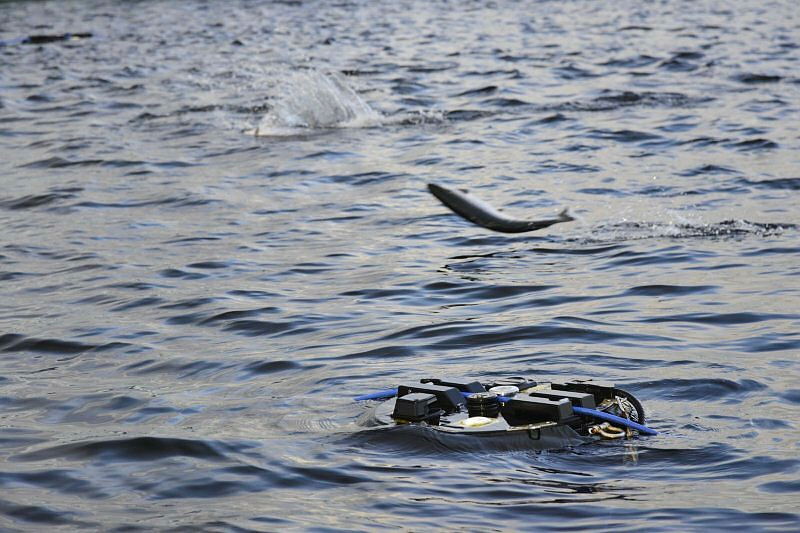
Why treatment frequency matters
Every reactive delousing event carries costs: fish stress, mortality risk, wellboat emissions, lost feeding days, and operational disruption. Reducing how often your sites require treatment is not just an environmental goal, it’s a production and welfare goal.
Until recently, the scale of that reduction at Stingray sites was documented operationally but not independently verified.
5% vs 10%
Weekly treatment probably at Stingray sites vs non-Stingray sites at 10°C reference temperature
(Worm et al., 2025)
The evidence
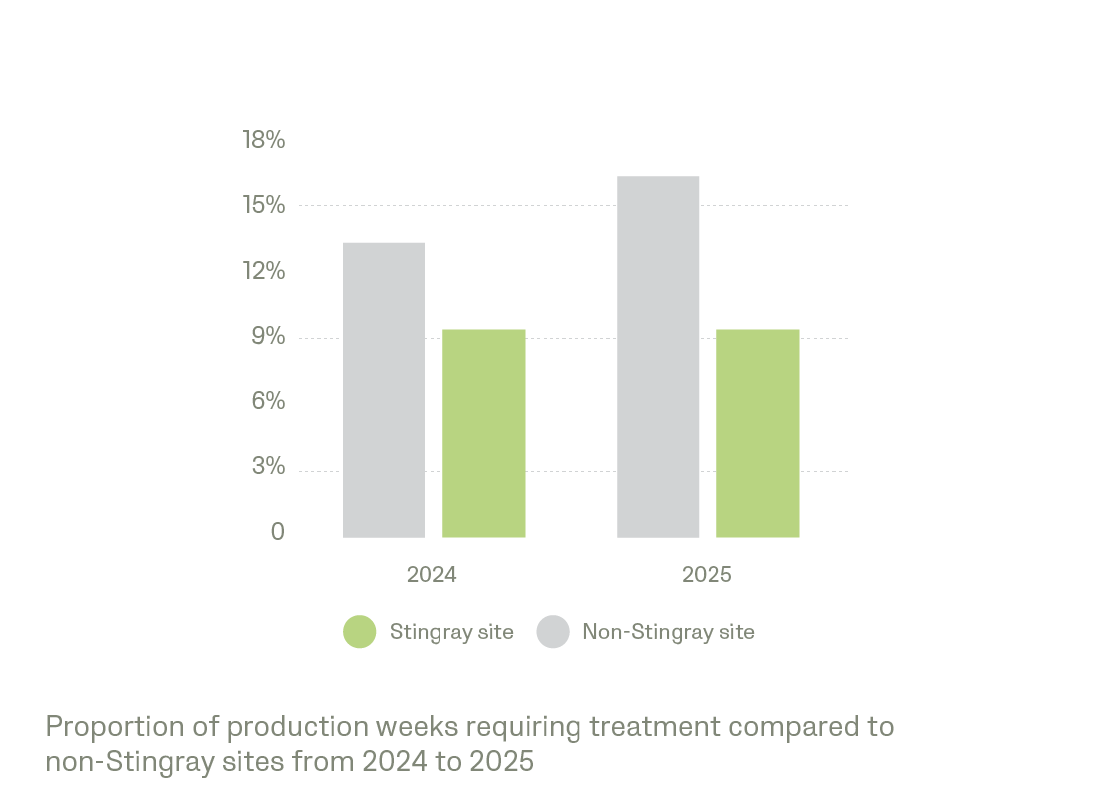
A peer-reviewed study by Worm et al. (2026), published in Aquaculture and conducted in collaboration with the University of Bergen, modelled weekly treatment probability across all Norwegian aquaculture sites in 2023. At a reference sea temperature of 10°C, Stingray sites showed a weekly treatment probability of 5%, compared with 10% at non-Stingray sites, a 50% reduction on a national level, observed consistently across all production areas where Stingray had sufficient market share to enable comparison.
Stingray’s own 2025 data is consistent with this: despite representing 23.2% of national production weeks, Stingray sites accounted for only 13.1% of treatment weeks.
What it means in practice
Fewer treatments means fewer handling events, less crowding, lower stress-related mortality and reduced reliance on wellboats. It also means a stronger welfare story for your certification and reporting obligations. Treatment intensity is a monitored metric under ASC, GLOBALG.A.P. and increasingly under ESRS frameworks.
If you want to reference this reduction in your own sustainability reporting, the published study provides an independent, peer-reviewed source.
Ask us how to use treatment frequency data in your welfare and emissions reporting.
Get in touch: sustainability@stingray.no